Unveiling the Enigma of the Girl With The Pearl Earring Painting
In the quiet corners of art history, few images possess the magnetic allure and enduring mystery of Johannes Vermeer’s Girl With The Pearl Earring Painting. Often hailed as the "Mona Lisa of the North," this exquisite portrait transcends its 17th-century origins, beckoning viewers into a timeless dialogue with its enigmatic subject. Far from a mere historical artifact, this iconic artwork represents a profound moment in Dutch Golden Age painting, capturing not just a likeness, but a fleeting emotion, a spark of human connection that resonates centuries later.
The journey of the Girl With The Pearl Earring Painting from relative obscurity to global superstardom is a testament to its intrinsic power. For a long period after Vermeer’s death, much of his work, including this captivating piece, was largely forgotten, residing in private collections and often misattributed. It was through careful scholarship and a renewed appreciation for his unique vision that the world gradually rediscovered the genius of Vermeer, and with it, the breathtaking beauty of this particular painting. Its "rediscovery" wasn't a physical unearthing, but rather a slow, deliberate re-evaluation that cemented its place in the pantheon of Western art.
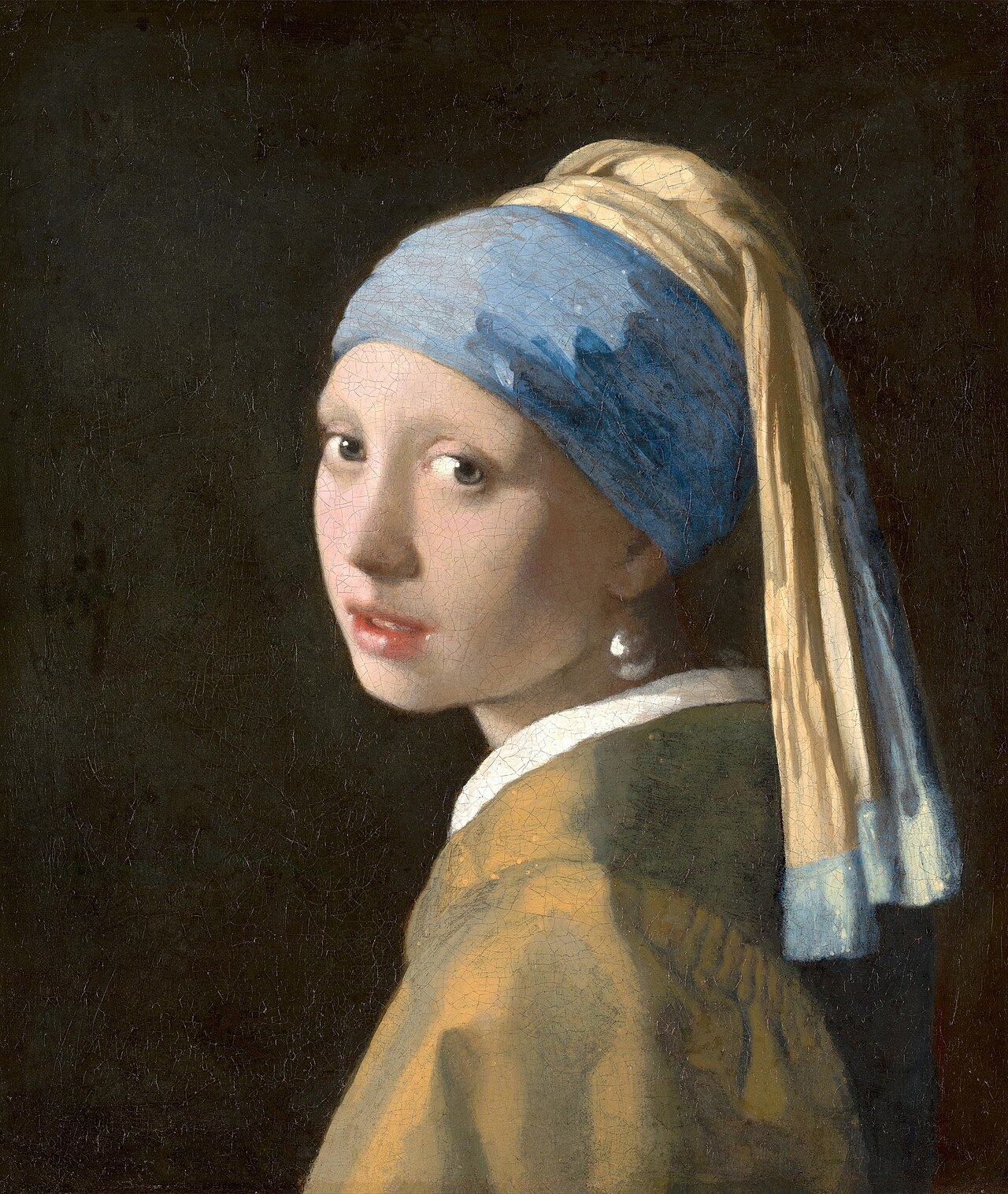
What makes the Girl With The Pearl Earring Painting so utterly captivating? It’s not just the masterful technique, but the profound sense of intimacy it evokes. The subject turns to face us, her eyes wide and direct, her lips slightly parted as if about to speak. This direct gaze, combined with the exotic turban and the luminous pearl, creates a sense of immediate engagement, prompting us to wonder about her thoughts, her story, and the world she inhabited.
The Artistry Behind the Canvas: Vermeer's Masterful Touch
Johannes Vermeer’s genius lies in his unparalleled ability to capture light and texture, transforming simple forms into breathtaking realities. The Girl With The Pearl Earring Painting is a prime example of his meticulous craft and innovative use of oil paint. He didn't just depict a figure; he rendered an atmosphere, a moment suspended in time, bathed in an almost divine glow.
The Elusive Identity: Who Was She?
Perhaps the most enduring mystery surrounding the Girl With The Pearl Earring Painting is the identity of its subject. Unlike traditional portraits, which often depict wealthy patrons or historical figures, this painting offers no clues to her social status or specific background. Theories abound: was she Vermeer's eldest daughter, Maria? A maidservant, as explored in Tracy Chevalier's novel? Or simply an idealized tronie, a study of an anonymous face expressing a particular emotion or character? Art historians generally lean towards the latter, suggesting that the painting was not intended as a specific portrait but rather a demonstration of Vermeer's artistic prowess in capturing expression and light.
This ambiguity is precisely what adds to the painting's universal appeal. Stripped of context, the girl becomes a symbol of beauty, innocence, and wonder, allowing each viewer to project their own interpretations onto her enigmatic gaze. She represents a universal human experience, making her accessible across cultures and centuries.
A Masterclass in Light and Shadow
Vermeer's unparalleled mastery of light is arguably the most striking feature of the Girl With The Pearl Earring Painting. The soft, natural light appears to emanate from an unseen window to the left, gently illuminating her face, the folds of her turban, and most strikingly, the focal point: the large tear-shaped pearl earring. Vermeer uses subtle gradations of paint, almost imperceptible brushstrokes, to create the illusion of iridescence on the pearl, making it seem almost impossibly real and luminous against the dark, featureless background.
The dark background itself serves to amplify the figure, pushing her forward and intensifying the viewer's focus on her face and the luminous details. This dramatic contrast, known as chiaroscuro, highlights her delicate features, the glistening of her eyes, and the wetness of her lips, creating a powerful sense of immediacy and presence. It’s a testament to Vermeer’s scientific understanding of light and his artistic ability to translate it onto canvas.
From Obscurity to Global Icon: The Rediscovery of a Masterpiece
The path to global recognition for the Girl With The Pearl Earring Painting was not immediate or straightforward. For centuries, Vermeer’s oeuvre was relatively unknown outside of a small circle of collectors and scholars. His output was small, and his meticulous, time-consuming process meant fewer paintings compared to contemporaries. It wasn't until the mid-19th century, largely championed by the French art critic Étienne-Joseph-Théophile Thoré-Bürger, that Vermeer’s genius was truly brought to light. Thoré-Bürger systematically cataloged Vermeer's works and championed their unique artistic merits, igniting a fervent interest in the Dutch master.
The painting itself entered the collection of the Mauritshuis in The Hague in 1902, after being acquired for a mere two guilders at an auction in 1881 by an art collector who recognized its potential. This purchase, initially an undervalued gem, eventually led to its permanent display in one of the world's most prestigious museums. Today, the Girl With The Pearl Earring Painting is the centerpiece of the Mauritshuis collection, drawing millions of visitors who come to stand before its quiet majesty. To learn more about its current home, you can explore details about Johannes Vermeer's Girl with a Pearl Earring at Mauritshuis.
Its transformation from a forgotten masterpiece to an undisputed cultural icon speaks volumes about its enduring aesthetic and emotional power. Its journey mirrors the wider story of rediscovering neglected talents whose works speak to universal human experiences, defying the passage of time.
The Enduring Legacy and Modern Interpretations
The appeal of the Girl With The Pearl Earring Painting has only grown stronger in the modern era. Its enigmatic quality makes it ripe for reinterpretation and engagement across various forms of media. The painting has inspired countless adaptations, from Tracy Chevalier's internationally bestselling novel, which vividly imagines the life of the girl, to the critically acclaimed film adaptation starring Scarlett Johansson. These modern interpretations have introduced the painting to new generations, further solidifying its status as a cultural touchstone beyond the confines of art history.
Beyond literature and film, the Girl With The Pearl Earring Painting continues to fascinate contemporary artists, who find endless inspiration in its composition, light, and subject. From homages to bold reinterpretations, its influence is visible across various artistic movements. This ongoing dialogue between the past and present highlights the painting's incredible versatility and its capacity to transcend its original context. It stands as a testament to the power of art to inspire, provoke, and connect across the centuries. To see how modern artists engage with this legacy, you might be interested in Girl With A Pearl Earring: A Muse for Modern Artists.
Tips for Appreciating the Girl With The Pearl Earring Painting
To truly appreciate the depth and beauty of this masterpiece, consider these insights:
- Focus on the Gaze: Spend time looking into her eyes. What emotions do you perceive? Does she seem curious, vulnerable, or knowing? The directness of her look is a key to its enduring power.
- Observe the Light: Pay close attention to how Vermeer uses light to shape her face, the folds of her turban, and especially the luminous pearl. Notice the subtle highlights and shadows that give the painting its lifelike quality.
- Consider the Mystery: Embrace the unknown. The lack of specific narrative allows your imagination to fill in the blanks, making the viewing experience deeply personal.
- Appreciate the Simplicity: Despite its profound impact, the composition is remarkably simple. A plain background, a single figure, minimal props. This simplicity forces the viewer to focus entirely on the girl herself.
- Visit in Person (If Possible): While reproductions are stunning, nothing compares to seeing the actual painting. The subtle nuances of color, texture, and scale can only be fully appreciated firsthand.
Conclusion
The Girl With The Pearl Earring Painting by Johannes Vermeer remains an unparalleled testament to the enduring power of art. From its quiet creation in Delft to its eventual rediscovery and ascent as a global icon, its journey is as captivating as the artwork itself. It's a painting that doesn't merely depict a subject; it encapsulates a moment of profound human connection, an intimate encounter with beauty, mystery, and the timeless allure of a gaze that has captivated generations. Its legacy continues to grow, inviting us all to look closer, to wonder, and to find our own reflections in the shimmering depths of that solitary pearl.