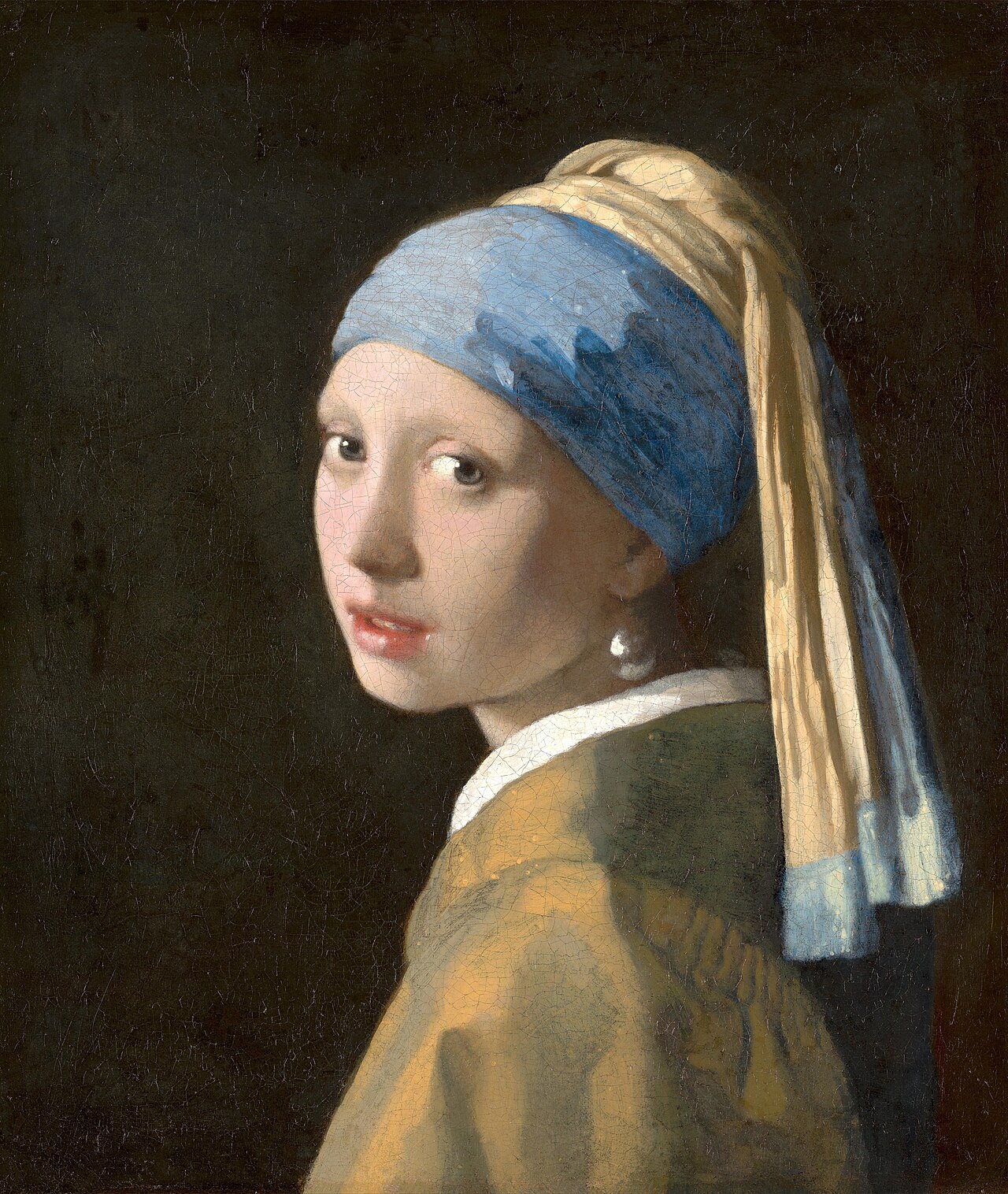
Unveiling the Timeless Allure of Johannes Vermeer's Girl with a Pearl Earring at Mauritshuis
In the quiet halls of the Mauritshuis in The Hague resides one of the most enigmatic and universally beloved masterpieces in art history: Johannes Vermeer's Girl With The Pearl Earring Painting. Often referred to as the "Mona Lisa of the North," this captivating portrait transcends centuries, drawing millions of visitors each year into its mysterious gaze. Far more than just a painting, it is a cultural icon, a testament to Vermeer's unparalleled skill, and a powerful symbol of beauty and intrigue. This article delves deep into the charm, history, and enduring legacy of this magnificent artwork, providing insights into its creation, its place in the world of art, and practical advice for experiencing it firsthand.
The Enigma of the "Mona Lisa of the North"
What is it about the Girl With The Pearl Earring Painting that captivates audiences so profoundly? Part of its allure lies in its profound mystery. Unlike many portraits of its time, the sitter is not a named noblewoman or a historical figure. She is an anonymous young woman, caught in a fleeting moment, turning her head as if interrupted. Her direct, almost intimate gaze engages the viewer, creating an emotional connection that feels incredibly personal. This direct engagement, combined with her serene yet slightly parted lips, suggests a whisper about to be uttered, or a secret being held. It's this profound sense of immediacy and the unknown identity of the subject that gives the painting its irresistible charm and has earned it comparisons to Leonardo da Vinci's famed portrait.
Vermeer's genius shines through in his masterful manipulation of light. The soft, luminous glow illuminating the girl's face, the glistening pearl, and the folds of her turban is nothing short of miraculous. He uses light not merely to illuminate but to sculpt, to define texture, and to evoke emotion. This particular use of light, a hallmark of the Dutch Golden Age, is perfected by Vermeer, making the girl appear almost alive, poised between shadow and illumination.
Johannes Vermeer: Master of Light and Domesticity
Johannes Vermeer (1632–1675) was a Dutch painter from Delft who, despite his relatively small output of around 35 known paintings, left an indelible mark on art history. His work is celebrated for its exquisite detail, meticulous technique, and profound sensitivity to light and color. Unlike contemporaries who often depicted grand historical or mythological scenes, Vermeer focused on intimate, domestic interiors, capturing ordinary moments with extraordinary beauty.
Vermeer's artistic journey began in a period of immense cultural and economic flourishing in the Netherlands, known as the Dutch Golden Age. While he likely trained as a painter, details about his early life and specific artistic education remain scarce. What is clear, however, is his dedication to his craft. He worked slowly, often using expensive pigments and experimenting with optical devices like the camera obscura to achieve unparalleled realism and atmospheric perspective. This meticulous approach often resulted in long periods between paintings, contributing to his relatively small oeuvre.
The Girl With The Pearl Earring Painting stands out among his body of work. While many of his other paintings depict women engaged in daily tasks like reading letters, playing musical instruments, or pouring milk, the 'Girl' is a tronie – a head study not intended as a portrait of a specific person, but rather a representation of a character or type. It allowed Vermeer to experiment with expression, costume, and light without the constraints of a commissioned portrait. This freedom likely contributed to the painting's enduring power and universal appeal.
A Closer Look at the Girl With The Pearl Earring Painting
To truly appreciate the Vermeer's Rediscovered Pearl Earring: A Timeless Story, one must examine its individual components and the artistic techniques that bring them to life.
- The Pearl Earring: The eponymous pearl is perhaps the most famous element of the painting. It isn't rendered with intricate detail but rather suggested by two masterfully placed dabs of white paint—one reflecting the light from above, the other a softer reflection from the girl's white collar. This minimalist approach gives the illusion of a massive, shimmering pearl, drawing the eye and adding a touch of exoticism and luxury.
- The Turban: The vibrant blue and yellow turban is another striking feature. The blue, likely ultramarine (made from ground lapis lazuli, a very expensive pigment), signifies its value and contributes to the painting's rich color palette. The exotic nature of the turban further enhances the girl's mystique, transporting the viewer to a world beyond provincial Delft.
- The Gaze: The girl's eyes are perhaps the most compelling aspect. They are large, dark, and glistening, directing a frank and open look directly at the viewer. This directness creates an unparalleled sense of connection, making the viewer feel as though they have caught a private moment, a shared secret with the young woman.
- The Background: Vermeer chose a simple, dark, almost featureless background for the Girl With The Pearl Earring Painting. This deep, rich, dark green (originally thought to be black) serves to isolate and highlight the girl, allowing her form and the vibrant colors of her attire to emerge with striking clarity. It eliminates distractions, forcing the viewer's focus entirely on the subject's face and expression.
- Vermeer's Technique: His brushwork is incredibly subtle, almost invisible, particularly on the girl's skin, achieving a smooth, lifelike quality known as sfumato. Yet, in areas like the pearl and the catchlight in her eyes, he uses small, precise dabs of impasto, creating texture and sparkle. This blend of smooth blending and selective impasto is a hallmark of his genius, giving his paintings a unique depth and luminosity.
Experiencing the Masterpiece at the Mauritshuis
The Mauritshuis, housed in a magnificent 17th-century mansion in The Hague, is the permanent home of the Girl With The Pearl Earring Painting. This intimate museum is a treasure trove of Dutch Golden Age art, making it the ideal setting for Vermeer's masterpiece. Unlike larger, sprawling museums, the Mauritshuis allows for a more focused and personal experience, enabling visitors to truly engage with each artwork.
Practical Tips for Your Visit:
- Book in Advance: The Mauritshuis is extremely popular, especially for those wanting to see the Girl With The Pearl Earring Painting. Booking your tickets online well in advance is highly recommended to secure your preferred time slot and avoid long queues.
- Visit During Off-Peak Hours: To enjoy a more intimate viewing experience, consider visiting right when the museum opens or later in the afternoon, closer to closing time. Weekdays are generally less crowded than weekends.
- Take Your Time: Don't rush your encounter with the 'Girl.' Allow yourself several minutes to simply stand and absorb the painting, observing how the light plays on her face and the subtle changes in her expression from different angles. It's an experience that rewards patience.
- Explore Other Masterpieces: While the 'Girl' is the star, the Mauritshuis also boasts other incredible works, including Vermeer's View of Delft, Rembrandt's The Anatomy Lesson of Dr. Nicolaes Tulp, and numerous works by Jan Steen and Frans Hals. Don't let your focus on one painting overshadow the entire collection's splendor.
- Consider an Audio Guide: An audio guide can provide fascinating historical context and deeper insights into Vermeer's techniques and the stories behind the paintings, enriching your overall visit.
Seeing the actual Girl With A Pearl Earring Painting: A Muse for Modern Artists in person is a profoundly different experience from seeing it in reproductions. The subtle nuances of color, the texture of the paint, and the sheer presence of the artwork are something that only a direct encounter can convey.
Cultural Impact and Enduring Legacy
The Girl With The Pearl Earring Painting wasn't always the global sensation it is today. For centuries after Vermeer's death, his work, including this painting, largely faded into obscurity. It was rediscovered in the late 19th century and gradually rose to prominence. Its true explosion into popular consciousness, however, came with Tracy Chevalier's 1999 historical novel, "Girl with a Pearl Earring," which fictionalized the painting's creation and the identity of its subject. The subsequent 2003 film adaptation, starring Scarlett Johansson as the enigmatic girl, cemented its status as a household name.
Today, the Girl With A Pearl Earring Painting continues to inspire countless artists, photographers, and creatives across various mediums. It has been parodied, reinterpreted, and celebrated in contemporary art, advertising, and pop culture, demonstrating its incredible versatility and enduring resonance. Its ability to spark imagination, provoke questions, and transcend its original context speaks volumes about its timeless appeal. The painting has become a symbol of curiosity, beauty, and the power of art to connect with the human spirit across generations.
Conclusion
Johannes Vermeer's Girl With The Pearl Earring Painting is more than just a masterpiece; it is a cultural phenomenon that continues to fascinate and inspire. Its enigmatic gaze, masterful use of light, and the enduring mystery of its subject have secured its place in the pantheon of art history. A visit to the Mauritshuis in The Hague offers a unique opportunity to stand before this iconic artwork and experience its quiet power firsthand. Whether you are an art aficionado or a curious traveler, the 'Girl' promises an encounter that is both profoundly beautiful and deeply moving, leaving an indelible impression long after you've left her captivating presence.