The Enduring Allure of the Girl With The Pearl Earring Painting: A Muse for Modern Artists
Few artworks possess the timeless resonance and enigmatic charm of Johannes Vermeer's "Girl With The Pearl Earring Painting." Often dubbed the "Mona Lisa of the North," this captivating canvas transcends centuries, drawing viewers into its silent, profound world. It's more than just a historical artifact; it's a living entity, continuously inspiring awe, scholarly debate, and perhaps most vibrantly, a ceaseless stream of contemporary artistic interpretations. From its subtle mastery of light to the mysterious identity of its subject, the painting serves as an inexhaustible wellspring for creators today, proving that true art never ceases to speak across generations.
The Enigmatic Beauty of the Original Masterpiece
The "Girl With The Pearl Earring Painting" is a quintessential example of Johannes Vermeer's genius, painted around 1665. During the Dutch Golden Age, a period of immense artistic and economic prosperity, Vermeer stood out for his intimate, meticulously crafted genre scenes and portraits. Unlike many of his contemporaries who painted grand historical narratives or bustling cityscapes, Vermeer focused on the quiet dignity of domestic life in Delft, mastering the depiction of light and shadow with unparalleled sensitivity.
A Glimpse into Vermeer's World and Technique
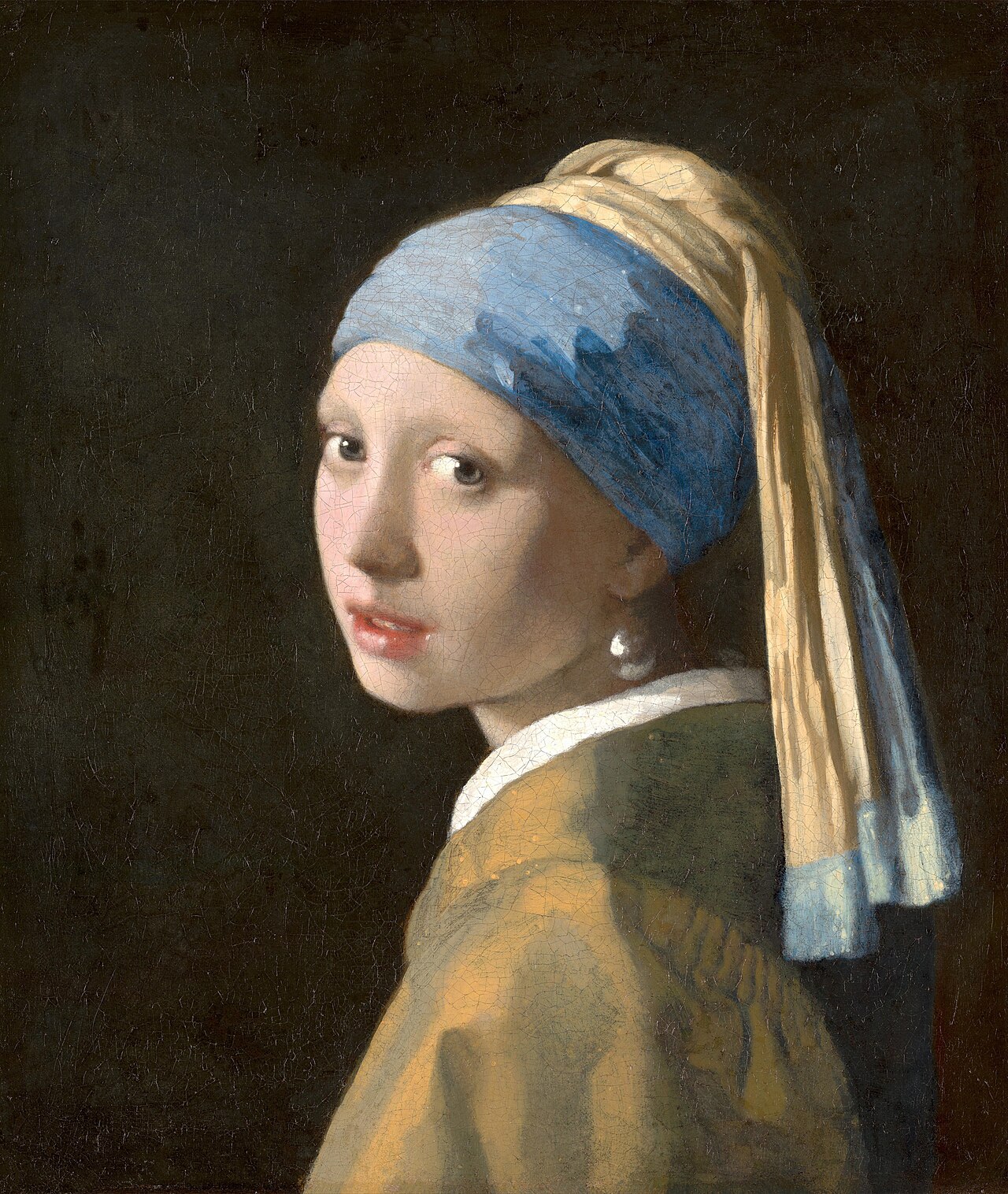
Vermeer's output was relatively small, with fewer than 40 paintings attributed to him, making each surviving work a precious treasure. The "Girl With The Pearl Earring Painting" is not a traditional portrait in the conventional sense, but rather a tronie – a Dutch term for a painting of a head that is not intended to be a portrait, but rather a study of an expression, costume, or character. This allowed Vermeer a degree of artistic freedom, focusing on aesthetic qualities rather than likeness.
He meticulously built up layers of paint, often using expensive pigments like ultramarine, derived from lapis lazuli, for the turban's vibrant blue. The technique of applying small dots of white paint, known as *pointillé*, creates the luminous effect on the girl's lips and the eponymous pearl, making them shimmer with an almost ethereal glow. The dark, indeterminate background serves to push the subject forward, intensifying her presence and making the painting incredibly immediate and impactful. It's a testament to Vermeer's skill that a canvas so modest in scale can command such profound attention, a direct result of his masterful understanding of light, color, and human emotion.
Unpacking the Visual Elements: The Power of the Gaze
At the heart of the "Girl With The Pearl Earring Painting" lies its most captivating feature: the girl's direct gaze. Her head is turned over her shoulder, meeting the viewer's eyes with an expression that is at once innocent, questioning, and subtly inviting. This direct engagement breaks the fourth wall, creating an intimate connection that feels deeply personal. Her exotic turban, a vibrant mix of blue and yellow, adds a touch of the dramatic, contrasting beautifully with the softness of her skin and the simplicity of her pearl earring.
The pearl itself is often considered one of the most famous pieces of jewelry in art history. Rather than a detailed rendering, it's depicted with just two strokes of paint – a highlight and a reflection – yet it convincingly conveys its lustrous weight and presence. This economy of detail, where suggestion triumphs over explicit rendering, is a hallmark of Vermeer's genius and contributes significantly to the painting's enduring mystery and appeal.
Why the "Girl With The Pearl Earring Painting" Continues to Captivate
The "Girl With The Pearl Earring Painting" has a unique journey through art history, experiencing periods of relative obscurity before its dramatic rediscovery and ascent to global superstardom. Its ability to transcend time and context is rooted in several compelling factors, making it much more than just a beautiful image.
The Allure of the Unknown and Human Connection
A significant part of the painting's charm is the enduring mystery surrounding its subject. Who was she? Was she Vermeer's eldest daughter, a model, a servant, or perhaps an idealized figure? Without a definitive answer, viewers are free to project their own narratives and emotions onto her, fostering a deeply personal connection. Her slightly parted lips suggest she's about to speak, or perhaps has just spoken, inviting endless speculation about her thoughts and feelings. This profound sense of intimacy, combined with her elusive identity, creates a psychological depth that few paintings achieve.
Moreover, the painting's aesthetic qualities appeal on a universal level. The soft light, the harmonious colors, and the delicate rendering of human vulnerability resonate across cultures and time periods. It's a moment frozen in time, yet paradoxically, feels incredibly alive and present, engaging each new generation of viewers with its timeless beauty. For a deeper dive into its historical context and rediscovery, consider reading
Vermeer's Rediscovered Pearl Earring: A Timeless Story.
From Obscurity to Global Icon: Cultural Impact
For centuries, Vermeer's works, including the "Girl With The Pearl Earring Painting," were not widely known outside of a small circle of collectors and scholars. It was only in the late 19th and 20th centuries, with renewed interest in Vermeer's unique style, that the painting began its ascent to iconic status. The publication of Tracy Chevalier's historical novel, "Girl with a Pearl Earring," in 1999, and the subsequent 2003 film adaptation starring Scarlett Johansson and Colin Firth, catapulted the artwork into mainstream popular culture. These adaptations breathed new life into the painting, imagining a compelling narrative around the girl and Vermeer himself, fueling public fascination and cementing its place as a global cultural icon. Today, it stands as a testament to the power of art to transcend its original context and become a universally recognized symbol.
The "Girl With The Pearl Earring Painting" as a Modern Muse
The iconic status of the "Girl With The Pearl Earring Painting" has made it an irresistible subject for contemporary artists across various mediums. Its enduring imagery, compelling narrative potential, and universal themes provide a rich foundation for reinterpretation and dialogue. Modern artists are not merely copying; they are engaging in a conversation with history, bringing their own perspectives to a timeless masterpiece.
Echoes in Contemporary Art: Reimagining an Icon
Artists today are drawn to the "Girl With The Pearl Earring Painting" for a multitude of reasons. Some are fascinated by Vermeer's technical prowess and seek to emulate or deconstruct his use of light and color. Others are more interested in the psychological aspects – the girl's enigmatic gaze, her unknown identity, or what she represents about female experience or the nature of portraiture.
Contemporary reinterpretations can range from respectful homages to provocative critiques. We see the girl's image transformed through different cultural lenses, with artists depicting subjects of diverse ethnicities, ages, or genders adopting her pose and signature pearl earring. Styles vary wildly: from pop art renditions with bold colors and graphic lines, to surrealist dreamscapes, to digital art, photography, and even street art. These modern takes often explore themes of identity, representation, objectification, and the contemporary gaze, demonstrating how a historical artwork can remain incredibly relevant. By placing the "Girl With The Pearl Earring Painting" in new contexts, artists challenge viewers to reconsider their assumptions about beauty, history, and the power of an image.
Tips for Artists Inspired by Classic Masterpieces
For aspiring and established artists looking to draw inspiration from the "Girl With The Pearl Earring Painting" or any classic artwork, here are some actionable tips:
1.
Study the Original Intensely: Before you can reinterpret, you must understand. Analyze the composition, color palette, brushstrokes, and emotional impact of the original. What makes it powerful?
2.
Identify Your Unique Angle: Don't just copy. What personal connection do you have to the piece? What contemporary issue or perspective can you bring to it? Perhaps you focus on the pearl, the turban, or the gaze, but transform its meaning.
3.
Experiment with Mediums: Think beyond paint. Could your reinterpretation be a sculpture, a digital collage, a performance piece, or even a piece of fashion?
4.
Challenge or Expand the Narrative: What if the girl lived in a different era? What if she was a different person? How would her expression change if the background was a bustling city? Use "what if" questions to spark creativity.
5.
Embrace Dialogue, Not Duplication: Your work should be a conversation with the original, adding a new voice or perspective, rather than simply replicating its form. Let your own artistic signature shine through.
Visiting the Masterpiece: A Pilgrimage to Mauritshuis
To truly appreciate the understated grandeur and subtle brilliance of the "Girl With The Pearl Earring Painting," a visit to its permanent home is essential. No reproduction, no matter how high-resolution, can capture the subtle shifts in light, the texture of the paint, or the intimate scale of the original work.
Experiencing Art in Person at The Hague
The "Girl With The Pearl Earring Painting" resides within the elegant walls of the Mauritshuis in The Hague, Netherlands. This distinguished museum is housed in a magnificent 17th-century city palace and boasts an unparalleled collection of Dutch Golden Age paintings, including several other masterpieces by Vermeer, Rembrandt, and Frans Hals.
Seeing the painting in person is a profoundly different experience. Its relatively small size (approx. 44.5 x 39 cm) often surprises visitors, yet its presence is immense. The subtle glow of the pearl, the vibrancy of the turban, and the penetrating, almost liquid quality of her eyes are best appreciated up close, allowing you to absorb the minute details of Vermeer's brushwork. To plan your visit and learn more about its exhibition, please refer to
Johannes Vermeer's Girl with a Pearl Earring at Mauritshuis.
Practical tips for visiting:
* **Book Tickets in Advance:** The Mauritshuis is a popular destination, and pre-booking helps manage crowds, especially if you want uninterrupted time with the painting.
* **Arrive Early or Late:** To experience the painting with fewer people, consider arriving right when the museum opens or an hour or two before closing.
* **Allow Time for Reflection:** Don't rush. Take a moment to step back and take in the painting as a whole, then move closer to appreciate the details. Observe how the light plays on its surface.
* **Explore the Context:** The Mauritshuis offers a superb collection, so don't just see the "Girl." Immerse yourself in the works of Vermeer's contemporaries to better understand his unique contribution.
The Legacy of Preservation and Inspiration
The Mauritshuis plays a crucial role not only in displaying but also in preserving the "Girl With The Pearl Earring Painting" through meticulous conservation efforts. These ongoing projects ensure that future generations can continue to be moved by its beauty. The painting's global tours and its continued presence in public consciousness ensure its legacy as a touchstone of art history, forever inspiring new interpretations and fostering a deeper appreciation for the boundless potential of artistic expression.
Conclusion
The "Girl With The Pearl Earring Painting" stands as an enduring testament to the genius of Johannes Vermeer and the timeless power of art. Its enigmatic beauty, masterful execution, and compelling history have secured its place not only as a jewel of the Dutch Golden Age but also as a powerful cultural icon. For modern artists, it remains a wellspring of inspiration, a challenging canvas upon which to project new ideas, question existing narratives, and forge fresh artistic dialogues. Whether viewed in a museum, reimagined in a contemporary studio, or explored through literature and film, the "Girl With The Pearl Earring Painting" continues to captivate, proving that true masterpieces possess an eternal ability to speak to the human spirit, transcending time and inspiring boundless creativity.